
RECENT POSTS
-
 June 20, 2025
 -
 June 16, 2025
 -
 June 13, 2025
 -
 June 9, 2025
 -
 June 6, 2025
Smart Irrigation 101: What Every DFW Homeowner Needs to Know Before Upgrading
Do you get fed up with brown spots on your lawn and big water bills? So, how about smart irrigation- a technology that is transforming the way homeowners irrigate their lawns? This approach is becoming increasingly popular in the DFW region, where clay soil and droughts are typical and present special watering issues. Smart systems also obey local watering laws.
In this blog, you will learn how smart irrigation works and whether an upgrade is the right decision.
What Is Smart Irrigation?
Smart irrigation is an advanced technology for irrigating your lawn. It is also more dynamic than traditional timer-based systems since it adapts in real time to weather, soil moisture, and plant requirements. It avoids overwatering and water wastage by supplying an adequate amount of water when your yard really requires it.
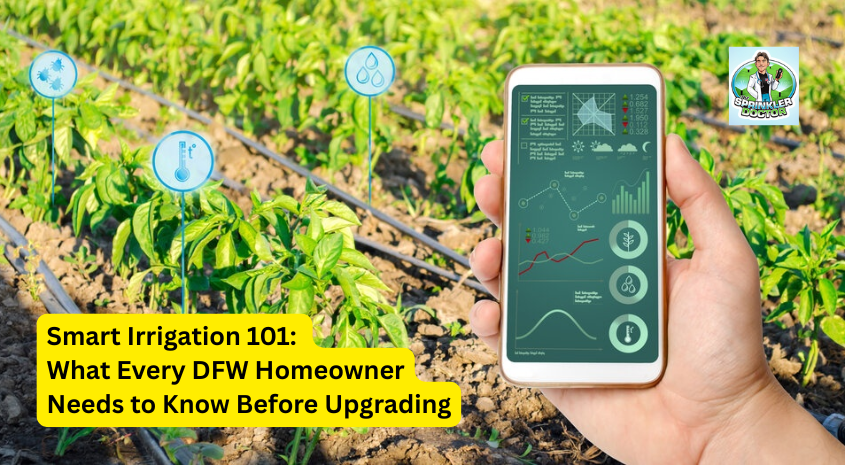
Such systems are usually equipped with Wi-Fi controllers, weather sensors, and mobile apps. They allow you to design your own zones and operate the system remotely using your phone. The system is programmed to water the lawn only when there is a need to; it takes into consideration factors such as soil type, the type of plants, and recent rainfall before operation.
What are the Benefits of Smart Irrigation Systems?
The technology involved in the use of smart irrigation ensures that there are many benefits derived from it.
1. Water Efficiency
Smart systems save water by avoiding excessive watering. They employ actual weather information to miss watering when rain is imminent or when the ground is moist, eliminating puddling, runoff, and oversaturation.
Moreover, the system will ensure that your yard is watered in the right quantity so that the grass remains green and waste is minimized. This efficiency will help the environment and your wallet in water-sensitive regions such as DFW.
2. Cost Savings
A smart irrigation system will conserve your water bill by avoiding overwatering and minimizing the run time. Fewer uses of water will also mean less strain on the pipes and sprinkler heads, and therefore the repair will be less expensive.
A smart irrigation system has the ability to reduce your water bill by preventing overwatering and reducing run times. Reduced water use will result in less pipe breakage and sprinkler head breakage, which will reduce repair bills.
Reduced utility use also relieves the city's infrastructure. In the long run, the savings will cover the installation cost of the system.
3. Convenience and Control
Smart irrigation makes lawn care easy. The system is controllable on your smartphone or tablet wherever you are. You can change the schedules or stop watering with a tap, even when you are on the road or working late.
No more guessing and running home to reset a timer. This system can stop in case of rain or automatically adjust to weather conditions, which allows you to be even more confident and have complete control.
4. Healthier Plants and Lawns.
Smart irrigation also helps nourish your lawn and garden to a booming extent by providing them with the required quantity of water based on their surrounding conditions. It avoids the problem of overwatering, which may cause root rot or fungal diseases, and dryness, which can cause unsightly brown spots.
Plants which have stronger and deeper roots suggest a lovely and green environment with little maintenance. Smart irrigation facilitates easy maintenance of year-round health for plants.
5. Impact on the Environment
Smart irrigation is also environmentally friendly. It only applies the water that your lawn needs, and hence avoids wastage of water in the nearby water bodies like rivers and lakes. This also reduces runoff, and thus the number of chemicals and fertilizers in the surrounding water bodies.
Additionally, the majority of smart systems are energy-saving, reducing the carbon footprint of your home.. In areas like DFW, every little bit helps to ensure that future water supplies are accessible.
Basic Elements of a Smart Irrigation System
- Smart Controller: It controls the date and time of watering, weather, and soil statistics to minimize water consumption and to increase performance.
- Moisture Sensors and Rain Shut-Off Devices: Detect how moist the soil is, and they never water during rain, or when the soil is already wet.
- Flow Meters that Indicate Leaks: You can monitor water use and be alerted immediately in the event of a leak or a burst water pipe.
- Drip Lines and Rotator Heads should be Efficient: Deliver water slowly and uniformly to roots, without wastage, and in a manner that encourages healthy plants.
- Mobile App or Desktop Control Interface: Enables your ability to view, manage and even control your irrigation system wirelessly via a smartphone or computer.
Before Upgrading to A Smart Irrigation System: What To Know
Before upgrading your system, consider the following.
- Compatibility with Existing System: One way of doing that is to find out whether the current sprinkler heads and piping can be fitted into a smart controller. Certain environments might require certain changes to be compatible. A professional assessment can guide an upgrade.
- Wi-Fi Strength: Smart controllers are powered by Wi-Fi to receive weather information and updates. A poor signal can cause an update to fail or take a long time. Make your controller well-connected, maybe with a Wi-Fi extender.
- Zoning Your Yard: Your yard has many areas that require different watering needs. Identify areas according to their exposure to the sun, soil, and plant material. This will assist your system in successfully providing the right amount of water to each zone.
- Learning How You Use Water: So that you can utilize your system to work your best, learn the amount of water your lawn needs in different seasons. When you know how much your lawn needs at different seasons, you can switch to the smart settings that will save water and give you healthy plants.
Conclusion
Homeowners in DFW can receive smart irrigation systems to be of great assistance to them. They conserve water, reduce costs, as well as make lawns healthier throughout the year. With a DIY installation or a professional setup, smart systems offer ease of control with less effort. Want to upgrade? Contact The Sprinkler Doctor now to get help.